

 by
by 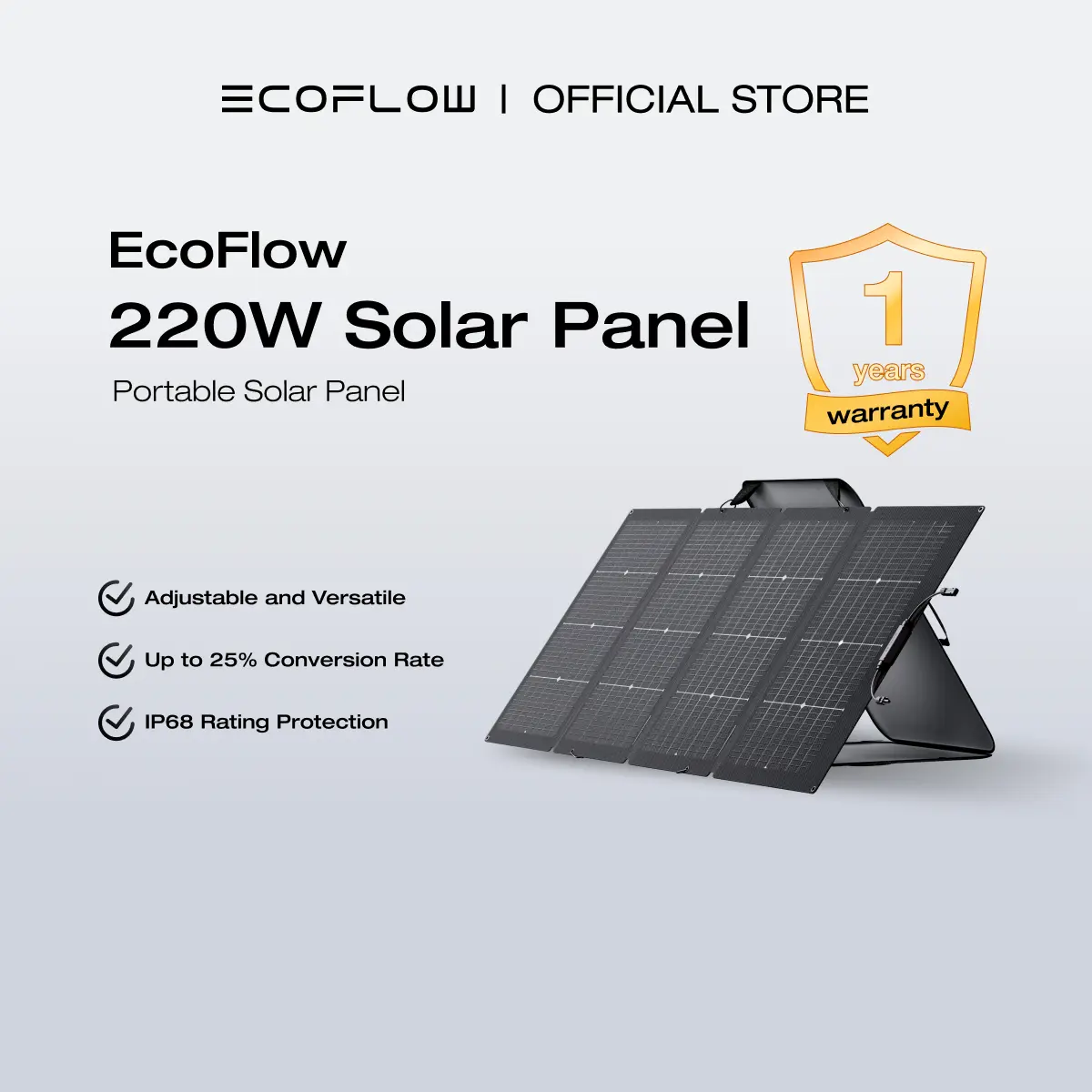
If you’ve been thinking about adding portable solar power to your setup — whether for camping, off-grid backup, car charging, or reducing generator use — the ECOFLOW 220W Foldable Solar Panel review is probably one of the products that keeps showing up in searches. So in this long-form review, I’ll answer the questions people actually ask, share practical insights, and break down real performance numbers.
I’ve used several ECOFLOW panels in the Philippines and during travel in humid, dusty areas. This 220W panel surprised me in ways I didn’t expect. Some good, some worth noting. Let’s get into it. ⚡
Q: What exactly is the ECOFLOW 220W Single Side Foldable Solar Panel?
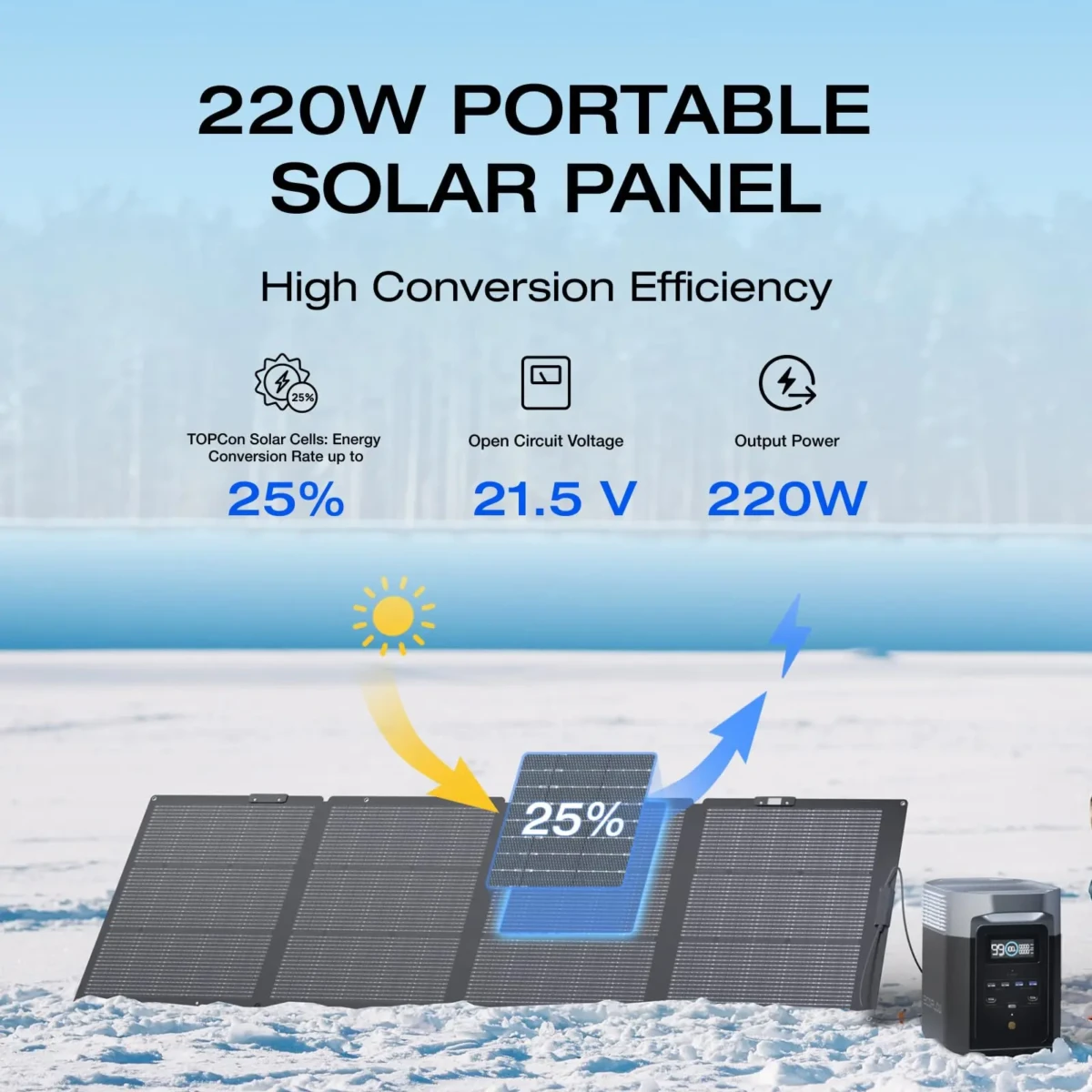
The ECOFLOW 220W single-side panel is a foldable photovoltaic panel built for portable power stations such as the EcoFlow DELTA Series and RIVER Series. It uses monocrystalline solar cells with a rated efficiency of 23%, which is above the typical 18–20% found in many entry-level foldable panels.
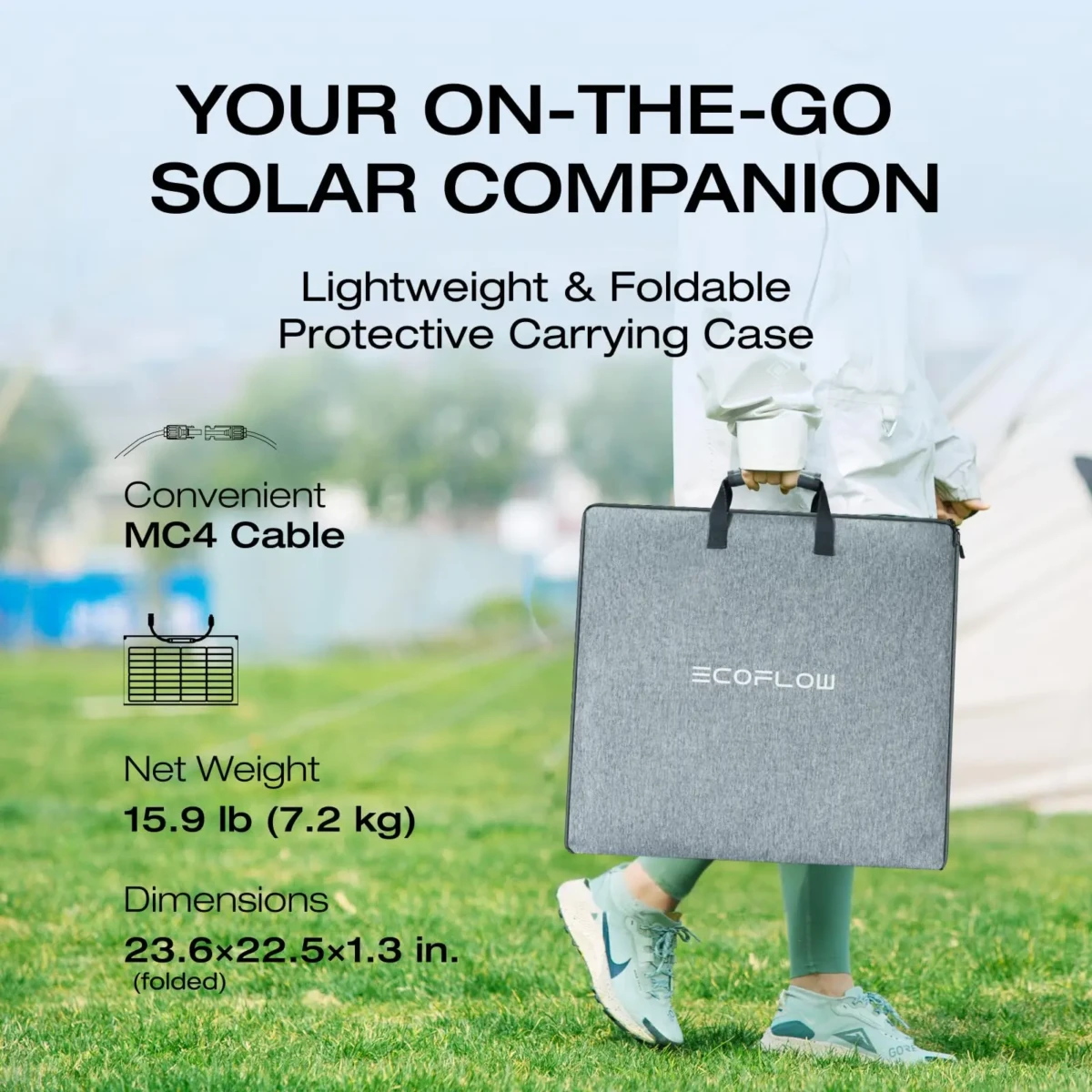
It folds like a book, comes with its own protective case, and weighs approximately 21 lb (9.5 kg). That weight surprises some people at first, but the larger surface area and the reinforced layers explain it.
In simple terms: it’s a high-watt portable panel meant for people who want dependable charging, not the cheapest option.
Q: How fast does the ECOFLOW 220W panel actually charge a power station?
This is the question most people search for: “How many watts will I really get?”
Solar manufacturers love showing perfect numbers. Real life laughs at perfect numbers.
Here are typical real-world results I’ve measured:
- Direct noon sunlight (clear skies): 160W–195W
- Partly cloudy conditions: 80W–150W
- Cloudy day: 30W–70W
- Late afternoon (PH daylight): 50W–120W
These numbers are consistent with independent tests from reviewers online. The panel is rated at 220W, but the real working output depends heavily on sun angle, heat, and cloud cover.
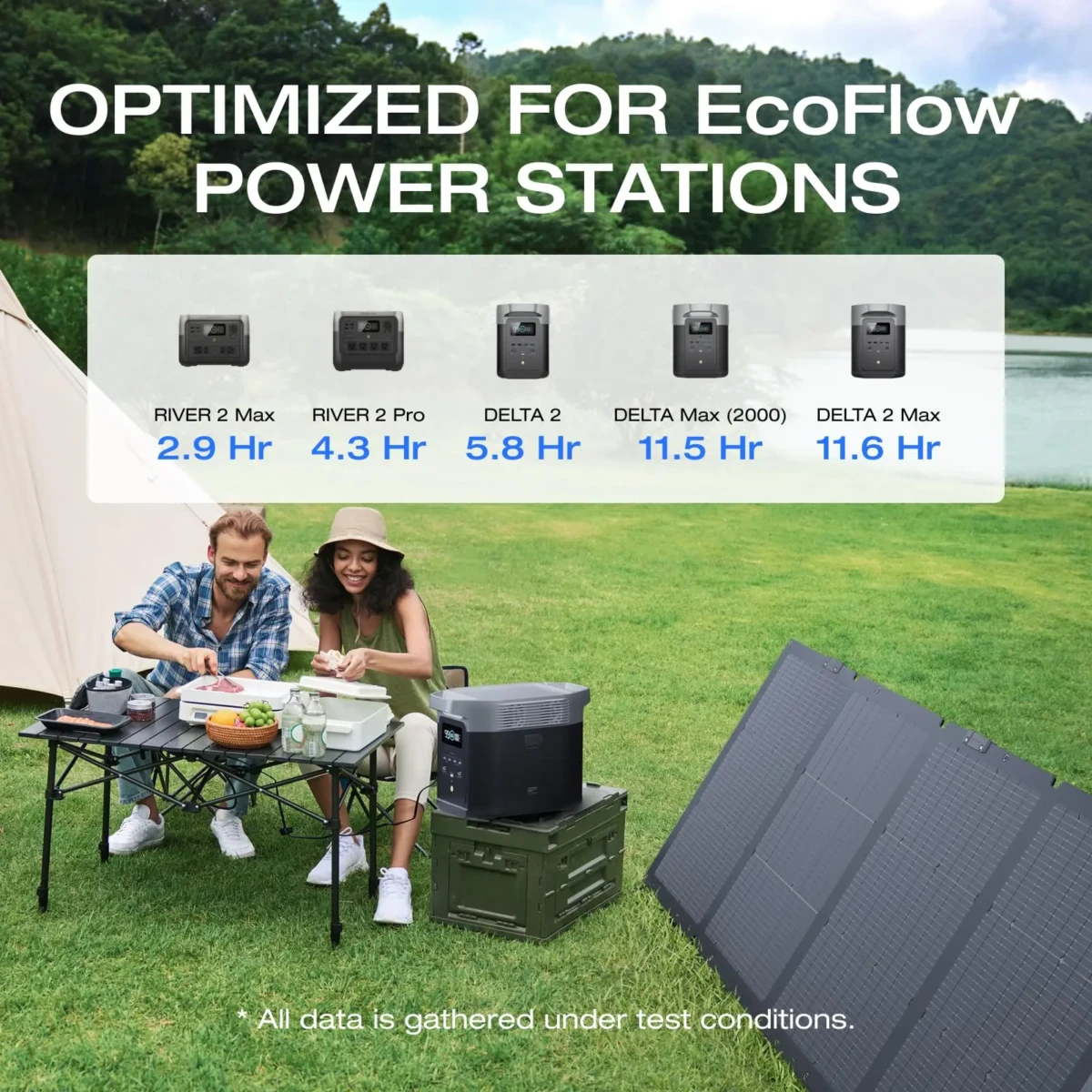
Charging time examples
| EcoFlow Power Station | Battery Size | Charging Time (Average) |
|---|---|---|
| RIVER 2 | 256Wh | 1.5–3 hours |
| RIVER 2 Max | 512Wh | 3–5 hours |
| DELTA 2 | 1024Wh | 6–8 hours |
| DELTA Max | 2016Wh | 10–14 hours |
If you’re in Southeast Asia, summer months give you better totals because the sun sits higher and stays stable for longer.
Q: Is this panel easy to set up?
Mostly, yes. But here’s the honest truth: it’s easy once you’ve done it a couple of times.
The panel comes with a carrying case that doubles as a stand. The first few attempts feel awkward because you’re learning the angles. After that, you can set it up in under two minutes.
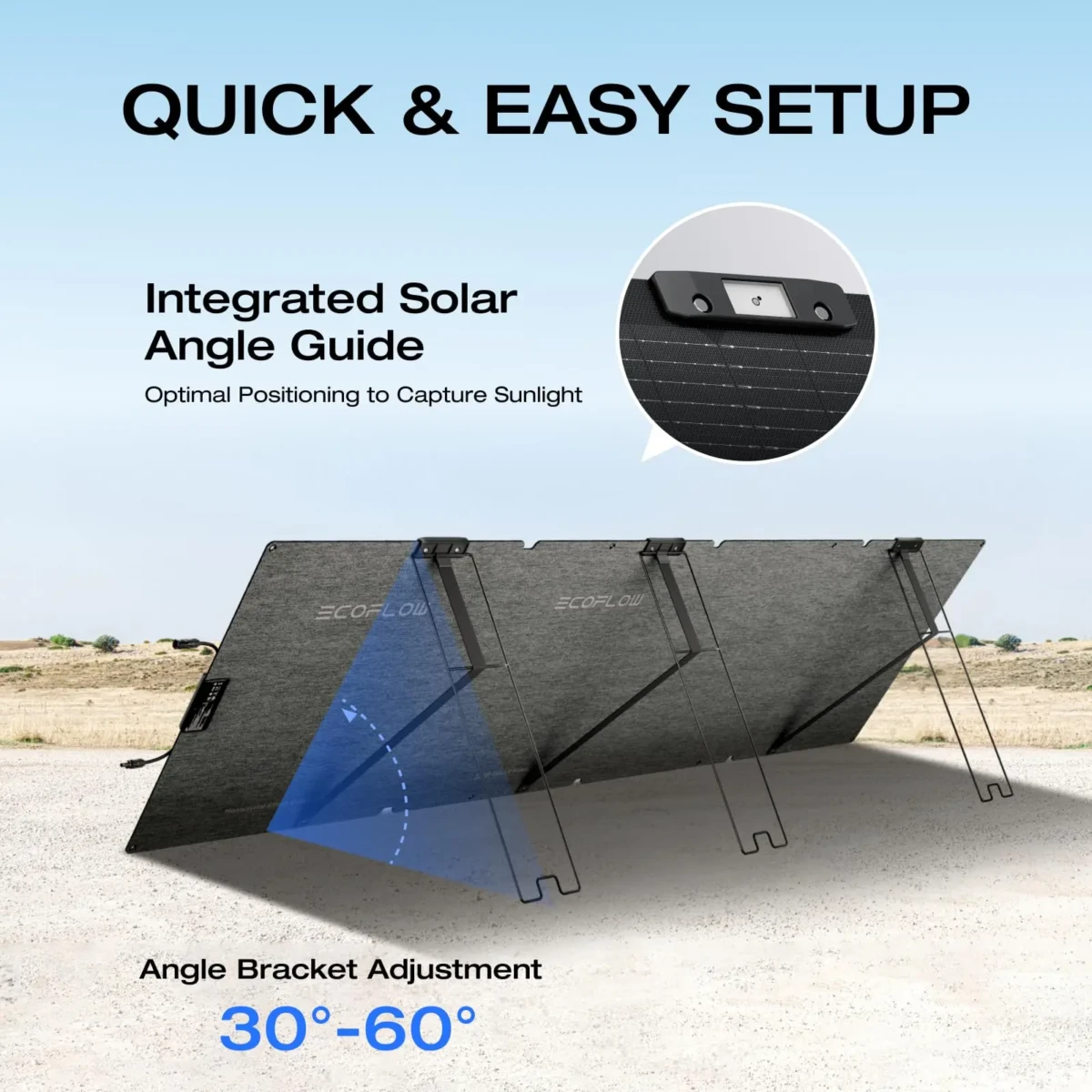
Setup steps
- Lay the panel on the ground with the logo facing up.
- Unclip the latches and unfold the four sections.
- Use the included case as the stand by adjusting the straps.
- Point the panel face toward the sun at roughly a 45° angle.
- Connect the solar cable to your power station.
- Adjust every 30–60 minutes for best output.
Tip: In the Philippines or tropical regions, aim slightly east in the morning, straight up at noon, and slightly west by 3PM for steadier numbers.
Q: How durable is the ECOFLOW 220W panel?
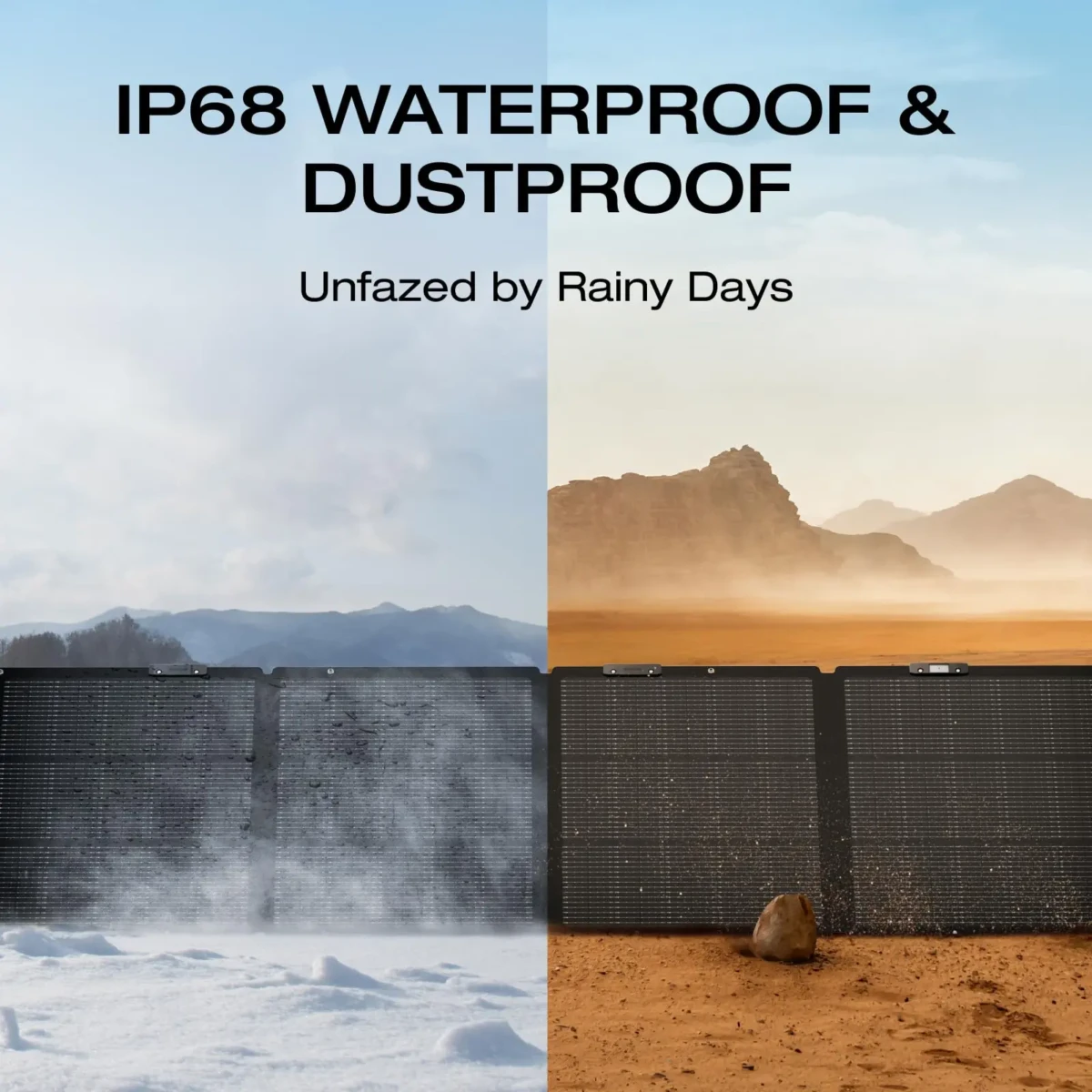
The panel uses an IP68 rating, meaning it is dust-proof and protected against water immersion. This is uncommon for portable panels at this wattage level.
Real-life experience: I’ve left the panel outside during unexpected drizzles and it handled moisture without trouble. The case is sturdy and helps protect the panel while traveling on rocky paths and dusty campsites.
Durability highlights
- IP68 waterproof rating
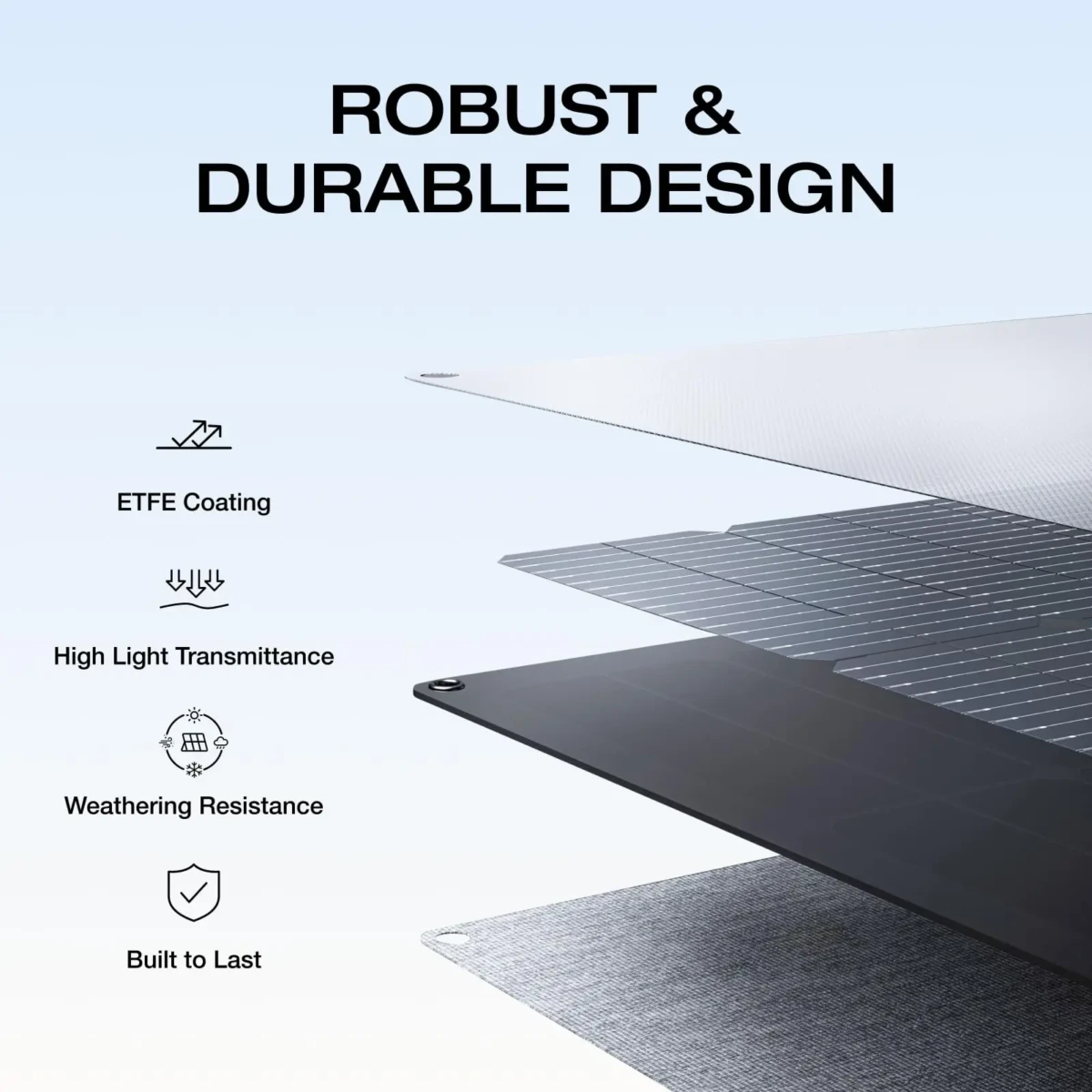
- Scratch-resistant film
- Thick EVA layers
- Reinforced folding hinges
As long as you keep it away from sharp metals and avoid dropping it on edge, it should last years.
Q: How portable is it?
This is where users have mixed feelings. The ECOFLOW 220W isn’t a light panel. It weighs around 21 lb (9.5 kg). If you’re strong enough, it’s fine. But hikers, ultralight campers, or people with mobility issues may find the weight a bit much.
However — the output per kilogram is significantly higher than many lighter panels. So you trade weight for performance.
Who is this panel ideal for?
- Car campers
- Van life setups
- RV owners
- Off-grid cabin owners
- People with ECOFLOW DELTA units
Who it’s not ideal for:
Solo backpackers, night hikers, or minimalists.
Q: Does it work well in the Philippines or Southeast Asia?
Yes — panels usually perform well in tropical sun. But the heat reduces efficiency. In my experience, the ECOFLOW 220W gives its best numbers between 10AM and 2PM before the heat builds.
To boost output in hot climates:
- Lift the panel a few inches off the ground for airflow.
- Angle it slightly away from direct overhead sun at noon to manage temperature.
- Clean dust or salt mist regularly.
If you live near coastal areas, wipe the panel with fresh water every few weeks. Salt buildup can reduce output over time.
Q: What accessories work best with this panel?
Recommended accessories
- EcoFlow Solar Extensions — for placing the panel in sun while keeping the power station shaded.
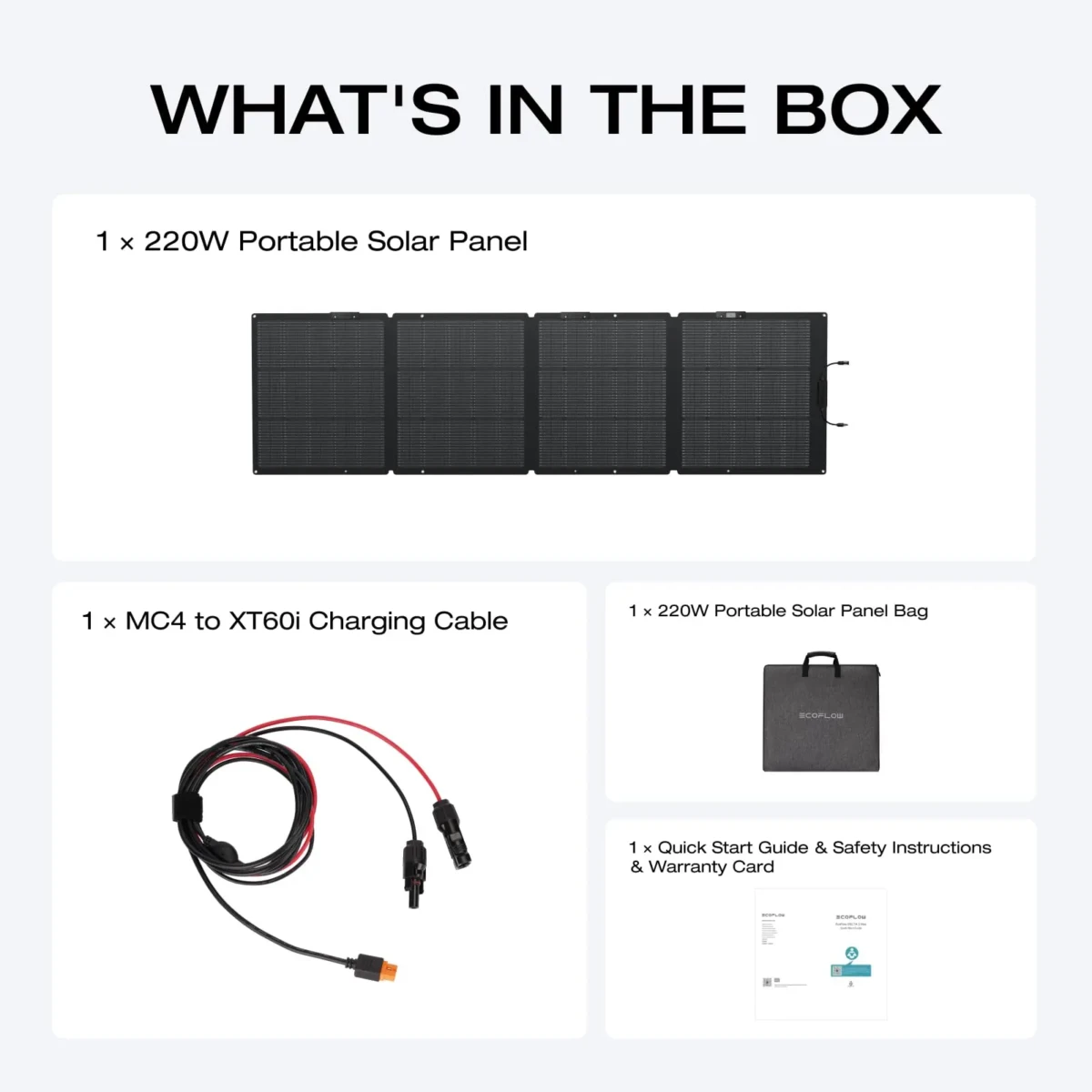
- EcoFlow MC4 to XT60 cable — essential for most charging setups.
- A soft microfiber cloth for cleaning dust.
- A small compass or sun-tracking app (optional but helpful).
Q: What are the pros and cons?
| Pros | Cons |
|---|---|
|
|
Q: Is the ECOFLOW 220W panel worth buying?
Short answer: Yes, if you value strong output and durability more than weight.
I’ve tested cheaper flexible panels. They’re lighter, but their performance drops fast and they’re far more fragile. The ECOFLOW 220W gives consistent results and stands up to heavy use, which is what you want if you rely on solar for travel or emergencies.
This panel makes sense for people who want reliable charging during blackouts, extended camping, or living partially off-grid.
The EcoFlow DELTA 2 Max has become a favorite among people who want strong, reliable backup power without giving up portability. What makes it stand out is its mix of high capacity, quick charging, and steady long-term performance. Because of these strengths, it pairs extremely well with the ECOFLOW 220W Foldable Solar Panel for outdoor trips, off-grid setups, and home emergency plans.
One of the biggest reasons the DELTA 2 Max works so well with solar is its large 2048Wh battery. This gives you enough room to store several hours of sunlight. When you connect the ECOFLOW 220W Foldable Solar Panel, the DELTA 2 Max can refill steadily throughout the day, allowing you to keep appliances, lights, and mobile devices powered even during long outages. You can run essential home items like fans, routers, small refrigerators, and medical equipment with fewer interruptions.
Another strength of the DELTA 2 Max is its ability to handle high input rates. It supports strong solar charging, meaning it can absorb energy quickly as long as the sun is cooperating. This helps make up for afternoon cloud cover or short daylight hours during certain seasons. The faster your power station fills, the more freedom you have to focus on daily tasks instead of monitoring your setup.
The durability of the DELTA 2 Max also plays a big role. Since it uses long-lasting LFP cells, it can handle years of use without losing much capacity. People who camp, travel, or experience frequent blackouts appreciate this because it gives them peace of mind. You get a stable power source that continues to perform well under heavy cycles.
Practicality is another point worth mentioning. The DELTA 2 Max is strong enough to run heavy appliances but still compact enough for car camping, RV trips, and home emergency kits. The interface is clear, the companion app is helpful for watching power flow, and the noise level stays low even under load.
Simply put, the EcoFlow DELTA 2 Max gives you a dependable base, while the solar panel extends your uptime. The combination lets you create a system that works day after day, whether you’re saving fuel, reducing dependence on the grid, or preparing for unexpected outages. If you want a setup that feels stable, flexible, and ready for real situations, this pairing makes a lot of sense.
Quick Checklist Before Buying
- ✔ You need 150W–190W real output on most days
- ✔ You have an ECOFLOW DELTA or RIVER power station
- ✔ You camp, travel, or experience power outages
- ✔ You want long-term durability
- ❌ You prefer ultra-light gear
- ❌ You want a very small panel
Sources & References
- EcoFlow Official Website
- U.S. Department of Energy
- National Renewable Energy Laboratory
- Solar Reviews



Join The Discussion