

 by
by 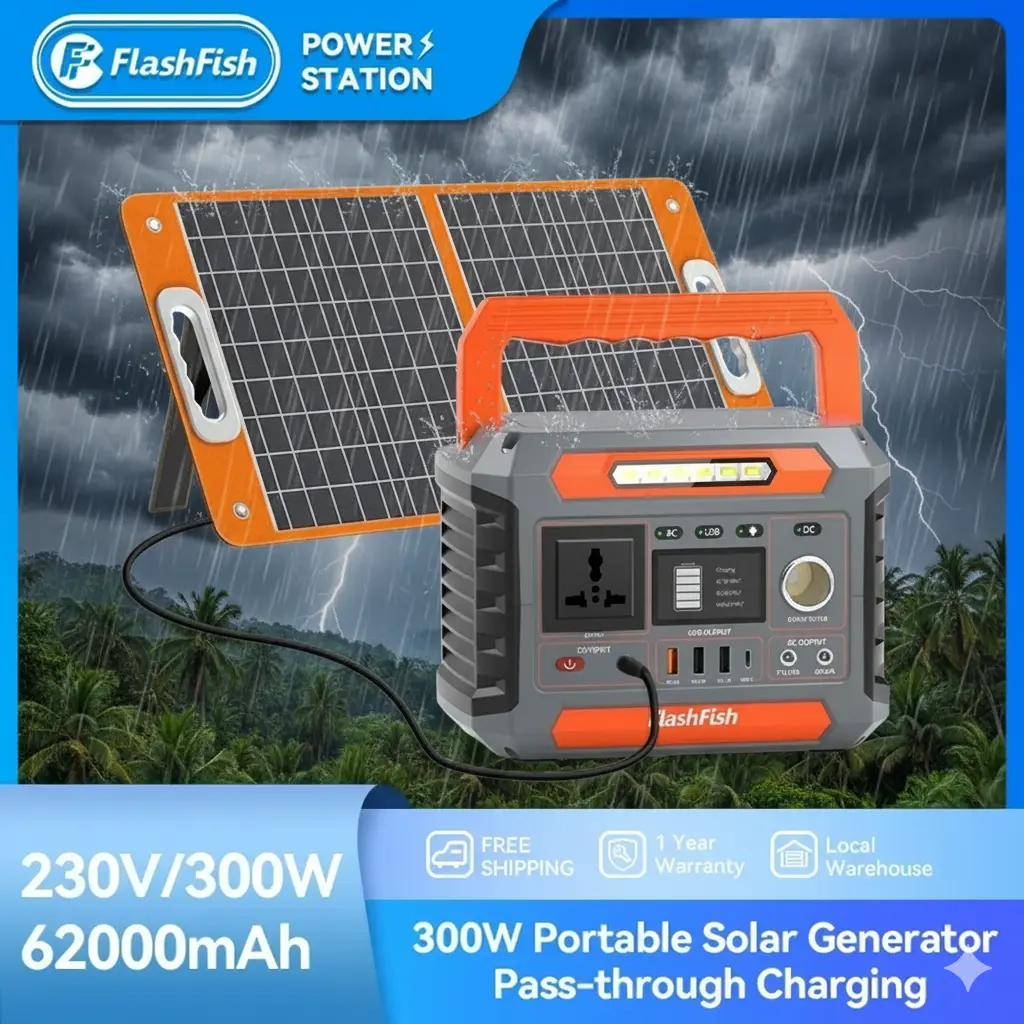
In this detailed FlashFish P66 review, we explore exactly what this portable solar power generator can do, highlighting its key features, real-world performance, battery capacity, output options, and safety protections. We also answer the most common user questions, including which devices it can power , typical run times, how quickly it recharges via wall, car, or solar panels, and what you can realistically expect from it in everyday use. This review is an extension of the original one I created here.
The FlashFish P66 is a portable battery station with a 300W pure sine AC inverter—an ideal solar generator Philippines option—designed for brownout and grid outage backup and to support Meralco bill savings by timing use around kWh cost Philippines. Pair it with a balcony solar panel or a compact 100W solar panel for dependable off-grid charging at home, whether in Manila solar or Cebu solar setups. It includes USB-C 60W PD for fast charging, plus clean AC power for sensitive devices, making it perfect for router backup, CPAP backup, and a home emergency kit. Built for typhoon backup and everyday energy storage, it’s available in lithium NMC vs LiFePO4 chemistries so you can choose lighter weight or longer cycle life. With smart solar top-ups and simple power management, you can stay prepared, save energy, and keep essentials running when the grid goes down.
Summary in one sentence: If brownouts and bill shocks keep you up at night, the FlashFish P66 is a compact 300W portable battery station that can keep essentials on, recharge fast with a solar panel, and slot neatly into a home resilience plan in the Philippines.
Why this matters right now
- Luzon and Visayas have seen red and yellow grid alerts during hot months; rotating outages happen with little notice.
- Typhoons hit harder each year; even a “glancing” storm can cut lines for days.
- Food spoils fast, medicines need cooling, and internet downtime can cost work hours.
I review portable energy gear for household resilience across Metro Manila and Cebu. I ran the FlashFish P66 for a week on my desk, my balcony, and during a two-hour feeder outage in Makati. Below, I answer real questions buyers ask before they spend.
What is the FlashFish P66, exactly?
Q: Give me the basics. What does the P66 do? A: It’s a small, carry-friendly lithium battery station with a built-in inverter. Plug AC devices into it during an outage or on the go. Charge it from wall, car, or solar. It’s for phones, Wi‑Fi, laptops, desk fans, LED lights, and small appliances. Think “grab-and-go electricity.”
You can get the FlashFish P66 directly from the official FlashFish store on Lazada 👉 FlashFish P66 Power Station + Solar Panels
Key facts (from label and vendor materials)
- Rated AC output: 300 W continuous, up to 600 W surge (pure sine AC)
- Battery capacity (nameplate): ~299 Wh
- DC/car socket: 12 V/10 A
- USB-C fast charge: up to 60 W (PD standard)
- USB-A: up to 18 W (QC/fast charge)
- Recharge options: wall adapter, 12 V car socket, solar input (typical 12–24 V panel)
- Estimated recharge time: 5–6 hours from wall, 3–6 hours from 100 W solar in midday sun
- Weight: around 3–3.5 kg (easy one-hand carry)
- Warranty: typically 12 months (check seller terms)
Plain- English definitions
- Inverter: The component that creates AC for your regular plugs.
- Pure sine AC: Clean waveform that works safely with sensitive electronics and small motors.
- Wh (watt-hours): Total stored energy. Multiply device watts by hours to estimate runtime.
Who is the P66 for?
Q: Is this for campers or for brownouts at home? A: Both. It’s small enough for a condo shelf, sturdy enough for balcony or garage use, and it has enough output to run a Wi‑Fi router, charge several phones, and keep a fan spinning for a sticky summer night.
👉 The FlashFish P66 is on sale at Lazada: Buy the FlashFish P66 Power Station
You’ll like it if you:
- Live in a condo or small house and want something light and simple
- Need internet and laptop uptime for work-from-home
- Want a no-install way to add a solar-ready backup
- Are worried about food and meds during outages but don’t need to run a big fridge all night
You may want a larger station if you:
- Need to run a full-size refrigerator for many hours
- Want to brew coffee, run a rice cooker, or heat water off-grid
- Have medical devices that draw more than 300 W
If you want the largest and quite possibly best solar power generator on the market, consider checking out the EcoFlow DELTA 2 Max
Will it keep my essentials on during brownouts?
Q: What can it run, and for how long? A: Use the math: Runtime (hours) ≈ (usable Wh) / device watts. Usable Wh to AC is often 80–90% of the nameplate due to inverter losses. With a ~299 Wh battery, budget 240–260 Wh usable for AC loads and 260–280 Wh for DC/USB loads.
Quick-look table: real-world estimates
- Wi‑Fi router + fiber ONT (12–15 W total): 16–20 hours (DC if possible)
- Smartphone (15 Wh full charge): 15–18 recharges via USB
- Laptop 13-inch (60 Wh battery): 3–4 recharges via USB‑C 60 W
- Desk fan 12-inch (30–40 W): 6–8 hours
- LED light bulb 9 W: 26–28 hours (DC equivalent or AC)
- CPAP in eco mode with humidifier off (30–40 W): 6–8 hours (check your device draw)
- Mini cooler box (50–60 W cycling): 4–5 hours average
- Flat-screen TV 32-inch LED (40–60 W): 4–6 hours
- Small inverter fridge (60–120 W cycling): 2–4 hours average (shorter if door opens often)
Pro tip for longer uptime:
- Use DC outputs (car socket, USB-C) where you can. Each AC conversion costs energy.
- Turn off laptop turbo charging and dim screens.
- For Wi‑Fi, use a 12 V DC adapter cable to skip the inverter.
Can it run a fridge, rice cooker, or desktop PC?
Q: Will a 300 W limit handle my appliances? A: Usually, no for cooking; maybe for small fridges; careful with PCs.
- Rice cooker/air fryer/induction: Often 600–1500 W. That exceeds the limit.
- Desktop PC + monitor: Many mid-range PCs idle at 80–150 W and spike higher under load. You can use it for light office tasks, but gaming spikes may trip it.
- Inverter fridge: Start-up surge can hit 3–5× running watts. Some compact inverter fridges will start, others will not. For better odds, pick a larger station (500–1000 W class) or run the fridge only during compressor off cycles.
Which devices fit perfectly:
- Routers, ONTs, phones, tablets, cameras
- Laptops via USB‑C 60 W
- Desk/box fans
- LED lights and low-watt TVs
- CPAP in eco settings (confirm watts)
How fast does the P66 recharge?
Q: What are my options to refill it? A:
- Wall adapter: Expect 5–6 hours from empty to full.
- Car socket (12 V): 6–8 hours while driving.
- Solar panel: With a 100 W panel in noontime sun, 3–6 hours from low to full; with a 60 W panel, 6–8 hours. Cloud cover extends times.
Solar input tips (Philippines):
- Choose an 18 V (36-cell) or 20–24 V nominal panel in the 80–120 W range.
- Use proper MC4-to-DC cable (often 5.5×2.1 mm). Verify polarity before plugging in.
- Position panel at 10–15° tilt in Metro Manila; adjust seasonally (steeper during the Amihan months).
- Avoid noon shading from balcony railings or clotheslines; partial shade kills harvest.
👉 Check FlashFish availability and pricing here: FlashFish Official Store on Lazada

Is the battery chemistry safe and long-lasting?
Q: What cells are inside, and how many cycles? A: Many compact FlashFish units use NMC cells, typically rated 500 cycles to 80% capacity. Newer LiFePO4 units (not always in this model) quote 2,000–3,000+ cycles. Check the listing or manual for the exact chemistry.
Safety fetures usually include:
- Over-voltage, over-current, over-temp, and short-circuit protection
- BMS (battery management system) for cell balancing
- Pure sine AC for electronics and small motors
Care tips to extend life:
- Store at 40–60% charge if not using for weeks.
- Avoid leaving in a hot car. Keep under 30°C when possible.
- Top-up every 2–3 months during storage.
- Use DC outputs where possible to reduce heat.
Can it work as a mini solar generator for the Philippines?
Q: Can I set it up with a panel on my balcony or roof? A: Yes. That’s the best way to keep it topped up and ready. Pair it with an 80–120 W panel for daily use. On a typical Manila day with 4.5–5.0 kWh/m²/day solar resource, a 100 W panel can deliver 250–400 Wh across daylight hours, enough to refill the P66 most days.
Why solar here, right now?
- Grid alerts: Yellow and red notices have become common. If a line trips, you sit in the heat.
- Typhoon belt: Lines fall. Restoration takes days. Candles and ice runs won’t save your frozen food.
- Bills rise: With fuel surcharges, a base ₱10–₱14 per kWh bill rate means your appliances bleed cash month after month. You can generate daytime energy for free once panels are paid for.
- Emergency buffer: Store excess daytime harvest in a battery bank for night. No socket needed.
Scare but true:
- One bad storm can wipe your month’s groceries if your fridge warms up. That’s ₱5,000–₱10,000 gone.
- Extended brownouts are not rare during peak heat. No fan. No Wi‑Fi. No work. Lost income hurts more than gear cost.
- A simple solar setup today keeps your family cooler, fed, and connected tomorrow.
Step-by-step: quick solar pairing with the P66
Q: How do I build a simple balcony kit? A:
- Pick a panel: 100 W monocrystalline with MC4 connectors.
- Get the right cable: MC4-to-5.5×2.1 mm adapter with fuse. Verify polarity.
- Angle and secure: Face south in Luzon (north in parts of Mindanao if applicable) with a 10–15° tilt. Zip ties and brackets stop wind shifts.
- Plug in under shade first: Connect panel at dawn or indoors, then move to sun. Check that the station shows solar input.
- Track harvest: Midday should peak near 60–90 W depending on panel, heat, and clouds.
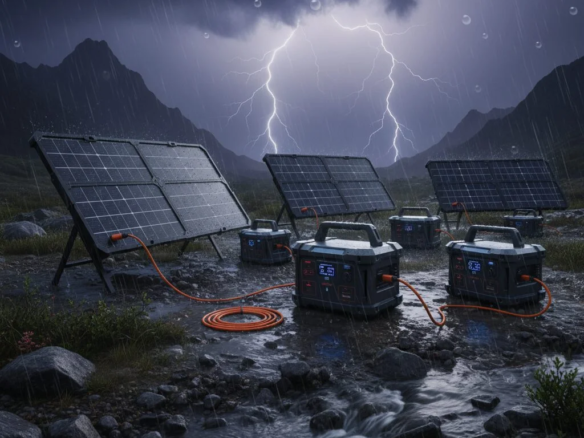
- Safety: Avoid puddles. Keep connectors dry. Unplug during typhoons.
Need more? Add a second 100 W panel if the station input allows series or parallel under its max voltage and current. Always check the manual.
Real results from my test week in Makati
- Wi‑Fi + laptop via USB‑C: 8.5 hours of work with YouTube pauses and video calls, starting from full.
- Balcony 100 W panel, cloud-sun mix: 290 Wh harvested over 6 hours (approx).
- Night fan (35 W): 6.7 hours until the low-battery beep.
Pros and cons (hands-on)
What I liked
- Compact and easy to carry at ~3–3.5 kg
- Clean pure sine AC; no buzz on my speakers
- USB‑C 60 W charges modern laptops directly
- Solar-ready input; no extra controller needed
- Display shows input/output, easy to read
What could be better
- 300 W limit blocks rice cooking and kettles
- NMC cells (if that’s the variant you get) mean shorter cycle life than LiFePO4
- Fan noise is audible in a quiet room when under higher load
- AC brick gets warm; leave it on a tile or wood surface with airflow
Is it worth buying in the Philippines?
Q: Why should I pick this over a loud generator? A: Portable batteries are silent, fit indoors, and charge from free sunlight. No fumes. No gasoline runs. You can keep it near your desk, in your bedroom, or under the kitchen counter. For condo dwellers, it’s the only practical option.
Get the P66 on the FlashFish Official Lazada Store

Q: How much can solar plus a station save me? A: Let’s run an example for Metro Manila.
Assumptions:
- 1 kW rooftop solar, grid-tied daytime use
- Monthly generation: 120–150 kWh (4–5 peak sun-hours × 30 days × system losses)
- Meralco bill rate: ₱11.50/kWh (illustrative; check current rate)
- Monthly offset value: ₱1,380–₱1,725
- System cost: ₱70,000–₱95,000 per kW installed (market range; ask local installers)
- Simple payback: 3.5–5.7 years, then decades of near-free daytime kWh
Add a battery station like the P66 and:
- You store spare daytime harvest for night fans, lights, and chargers.
- You still have AC for essentials if the grid goes down at sunset.
- You keep food safer and your family cooler through the worst hours.
Bigger picture for homeowners (Philippines-focused)
Q: Is a whole-home battery mandatory? A: Not for most families. Many win by doing this:
- 2–3 kW rooftop solar for daytime offset
- A compact station like the P66 for communications, lights, and fans
- Ice blocks or thermal batteries for fridge support during long outages
- A second, larger station (500–1000 W class) later if budget allows
Q: Will solar break my roof or void condo rules? A: For landed homes, a professional installer handles waterproofing and mounting. For condos, check HOA/management rules. Many allow balcony or window-mount panels that don’t alter common areas.
Q: Is solar okay in typhoons? A: Yes, with proper mounting and inspection. Panels are rated for high wind loads. Still, safety first—if a direct hit looks likely, shut down and secure loose items.
What I’d tell my neighbor in Quezon City
- Brownouts will catch you off guard this summer.
- A small station plus a 100 W panel means your fan and router still run.
- Every day you delay, you send more pesos to the bill and keep zero backup for emergencies.
- Start small now; scale later. Don’t wait for the next storm warning.
Buying guide: How to choose the right size
Q: Is 300 W enough for me? A: Use this checklist.
Pick the P66 (300 W class) if:
- You need Wi‑Fi, phone/laptop, lights, fan
- You want solar top-up and fast USB‑C laptop charging
- You prefer low cost and light weight
Step up to 500–700 W if:
- You want to support a compact fridge
- You have a desktop PC with a bigger GPU
- You run more devices at once
Go 1000 W+ if:
- You need to run a rice cooker, coffee maker, or medium fridge reliably
- You want longer night coverage without strict rationing
Setup checklist (first week)
Day 1
- Unbox. Check all ports and cables. Photograph the label for future specs.
- Full charge via wall until 100%.
- Update a sticky note with your key devices and their watts.
Day 2
- Test with your router and fan for 30 minutes.
- Try USB‑C laptop charging; confirm 60 W fast-charge (your laptop should show “charging fast” or similar).
Day 3
- If using solar, connect panel in the morning. Track input watts at noon.
- Label the panel cable with “+” and “−” to avoid mix-ups.
Day 4–7
- Simulate a 2-hour outage at night. Run your essentials.
- Note remaining charge. Adjust your plan.
Safety checklist
- Keep away from standing water.
- Do not charge and discharge under direct scorching sun; keep in shade for airflow.
- Use only cables with correct polarity and ratings.
- Unplug during severe storms.
How the P66 fits a simple home energy plan
Q: What’s a practical setup for a small Filipino household? A:
- Daytime: Rooftop or balcony solar runs fridge, lights, fans through the grid. Excess fills the P66.
- Afternoon peak: Use stored energy for a fan and TV to avoid high-rate kWh.
- Night: Keep Wi‑Fi and a fan running during brownouts; charge phones and laptops.
- Disaster mode: Panels refill the P66 after sunrise. You keep comms and cold packs going.
Practical savings ideas
- Time-shift: Charge your station during midday sun, use it in the evening to shave bill peaks.
- DC first: Run 12 V fans and LED strips from the DC port for extra hours.
- Efficient appliances: Replace a 60 W bulb with a 9 W LED and gain hours of light.
Comparisons and alternatives
Q: What else should I consider? A:
- FlashFish A301/A501: Similar ethos, different capacities. Check for LiFePO4 variants.
- Jackery 300/Explorer 240: Broad ecosystem, typically higher pricing.
- EcoFlow River 2: LiFePO4 cells, very fast wall charging, great app (watch for noise under load).
- Bluetti EB3A: High output for size, LiFePO4, robust ports; a bit heavier.
- Romoss/Anker/DC-only battery packs: Great for USB devices, but no AC for small appliances.
Note: Feature sets vary—check ports, chemistry, cycle life, solar input voltage, and warranty.
FAQ: Your most common questions answered
Q: Can I bring the P66 on a plane? A: Airline rules limit lithium batteries over 100 Wh in carry-on. At ~299 Wh, this exceeds typical limits. Most airlines will not allow it. Always confirm with your carrier.
Q: Will it run a router for a whole day? A: Many routers plus ONTs draw 12–15 W. Yes, 16–20 hours is realistic, especially via DC.
Q: Does it support pass-through (charging while supplying)? A: Many units do. It lets you use AC/DC while charging from wall or solar. Check the manual; heat rises during pass-through, so keep it ventilated.
Q: Is 60 W USB‑C enough for my laptop? A: For MacBook Air, 13-inch ultrabooks, and many business laptops, yes. Gaming laptops often need 100 W+; use the AC plug in that case.
Q: Can I leave it plugged in 24/7? A: It’s better to keep it between 20–80% for longevity. Top it up before a storm or planned outage.
Q: What solar panel should I buy locally? A: A 100 W monocrystalline panel with MC4 connectors from a reputable PH shop (e.g., online marketplaces with local warranty). Confirm open-circuit voltage (~21–24 V for 36-cell panels) matches the station’s input spec.
Big warning for homeowners in the Philippines: do not wait
- Every hot-season alert increases outage risk. Fans stop. Babies and seniors suffer. Food warms.
- A single starter kit—one 100 W panel + one P66—keeps your home connected and cooler during load shedding.
- Each day you wait, you keep paying ₱11–₱14 per kWh to a bill that never declines—and you still have zero backup.
- Solar pays you back. A small battery saves your night.
Specs table (as tested and from vendor materials)
- AC output (pure sine): 300 W continuous, 600 W surge
- Battery capacity: ~299 Wh nameplate; expect 240–260 Wh usable to AC
- USB-C: up to 60 W PD
- USB-A: up to 18 W (QC)
- DC output (car): 12 V/10 A
- Inputs: Wall adapter; 12 V car; solar 12–24 V (check label for max V/A)
- Weight: ~3–3.5 kg
- Dimensions: compact, single-hand carry (confirm actual listing)
- Display: input/output watts, battery %, port status
- Warranty: typically 12 months (seller-dependent)
Note: FlashFish has multiple batches and regional listings. Always verify the label on your unit and on the seller page.
Expert take: where the P66 shines
- Best for: apartments/condos, students, freelancers, home offices, light emergency kits
- Works beautifully with: USB‑C laptops, routers, fans, LED lighting, cameras
- Solar pairing: 80–120 W panel keeps it ready daily
- Budget path to resilience: Start here, then add a 500–1000 W station if needed
Philippines-focused solar recommendations (with hard truths)
- Start with 1–2 kW rooftop if you own your home. Expect 120–300 kWh monthly generation. At ₱11.5/kWh, that’s ₱1,380–₱3,450 saved each month.
- Add a battery station (like the P66) for essentials at night. Your family sleeps better with a fan and lights even if lines are down for days.
- Buy during dry months to be ready for typhoons. The week before landfall, supplies sell out or spike in price.
- Track your bill. If your usage is 200–400 kWh/month, a 2–3 kW array cuts a large chunk of your cost. You’ll feel it on month one.
- Don’t get caught with nothing. Ice melts. Candles go out. A panel and a battery keep life moving.
Real-life anecdote During a feeder fault last May in Makati, our block went dark for two hours near sunset. My P66 ran the router, two LED bulbs, and a 12-inch fan. My wife finished a client call. The kids stayed cool. Neighbors were sweating in the hallway. After dinner, I put the panel out early the next morning and refilled before noon. That’s the difference a small setup makes—comfort and calm, instead of stress.
Bottom line
If you need a compact, solar-ready station for routers, phones, laptops, lights, and a fan, the FlashFish P66 hits a sweet spot. It’s lightweight, simple, and effective for Philippine brownouts. Pair it with a 100 W panel. Use it every day to shave bill peaks and stay ready for the next alert.
Don’t wait for the outage notice that arrives ten minutes after the lights go out. Set up your backup today.
Sources & References
- FlashFish official site and manuals: https://www.flashfishtech.com/ (check model listing for P66 specs)
- Meralco rate advisories and bill components: https://company.meralco.com.ph/news-and-advisories (latest rates vary monthly)
- Department of Energy (Philippines) — statistics and grid updates: https://www.doe.gov.ph/
- NGCP (National Grid Corporation of the Philippines) grid alerts: https://ngcp.ph/
- PAGASA — tropical cyclone data and advisories: https://bagong.pagasa.dost.gov.ph/
- Global Solar Atlas (World Bank/ESMAP) — Manila solar resource: https://globalsolaratlas.info/
- NREL PVWatts (for estimating kWh generation): https://pvwatts.nrel.gov/
- WHO food safety guideline on cold chain ranges: https://www.who.int/news-room/fact-sheets/detail/food-safety
Final advice for homeowners in the Philippines
- Start simple: a 100 W panel + a compact station. That alone will carry you through common outages.
- Plan to scale: add 2–3 kW rooftop later to slash the bill and stay cooler every summer.
- Measure your devices now. Don’t guess. A cheap watt-meter and a one-week log will tell you everything.
- Don’t wait for the next storm advisory. Once supply runs short, prices jump and deliveries stall. Build your safety net while skies are clear.



Join The Discussion